

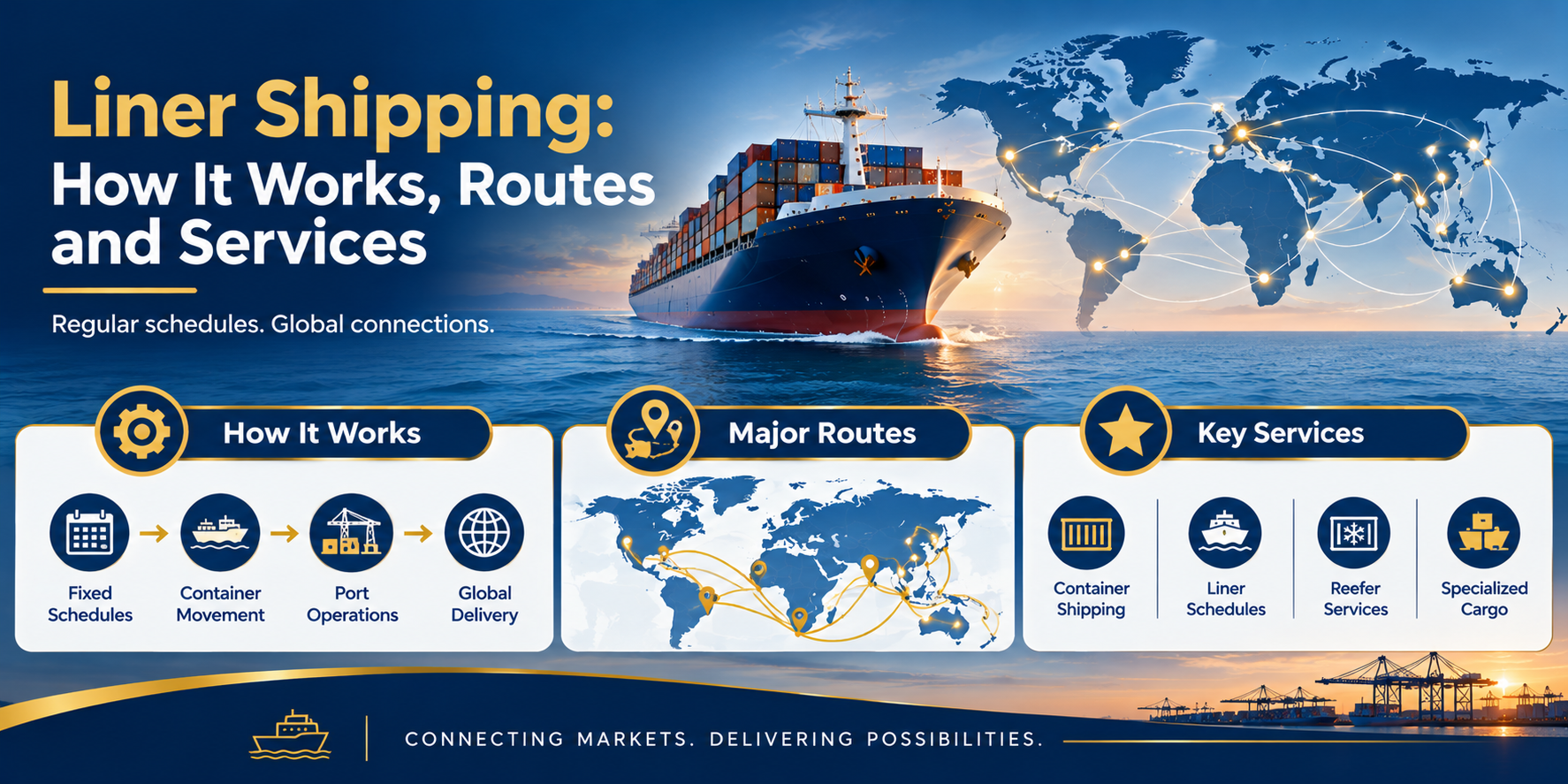
Effective shipping schedules and set routes are essential for international cargo transport. Liner shipping links businesses around the world with regular service and scheduled port calls.
Liner shipping is a maritime transport service in which ships sail on regular routes, have predetermined sailing schedules, and call on regular ports. It is mainly used to transport by container between international ports or for transporting containers.
Liner shipping is the scheduled shipping of vessels between ports and through regular shipping routes. Shipping lines have a fixed schedule of ships that are available for businesses to book space for cargo shipping and book a cargo shipment.
The major features of the device are the following:
Liner shipping involves 6 steps of coordination: route planning, cargo booking, documentation, loading containers, shipping vessels, and discharge of cargo.
|
Stage |
Activity |
|
1. Route Planning |
Shipping companies designate routes and schedules of voyages. |
|
2. Cargo Booking |
Shippers book space on ships either directly with the shipping line or via their agent. |
|
3. Documentation |
Ship and customs documents are prepared as required. |
|
4. Container Loading |
Containers arrive at the terminal and are loaded onto the ship. |
|
5. Vessel Operations |
This ship operates as per its regular rotation and sailing schedule. |
|
6. Cargo Discharge |
The containers are offloaded at the port of destination for release or further transport. |
There are various configurations of shipments that are used for liner shipping services to link up the major ports with regional ports.
|
Service Type |
How It Works |
|
Mainline Services |
Link key international ports by well-developed long-distance shipping lines. |
|
Feeder Services |
Link small or regional ports to larger ports. |
|
Direct Services |
Carry cargo from origin to destination ports directly without transferring to another transport. |
|
Transshipment Services |
Transfer cargo using an intermediate port with containers on another vessel. |
There are many interdependent factors that affect liner shipping operations and how vessels are scheduled and cargo is moved.
|
Component |
Role in Operations |
|
Vessel Scheduling |
Sets up scheduled end and start dates. |
|
Shipping Routes |
Establishes a link between source and target ports. |
|
Port Rotation |
Sets the order of vessels visiting port. |
|
Cargo Booking |
Reserves vessel space for shipments. |
|
Vessel Capacity |
Calculates the capacity for cargo transport. |
|
Stowage Planning |
Decides where to place containers on board the ship. |
|
Port Operations |
Assists in the arrival, loading, and discharge of ships. |
|
Documentation |
Provides shipment and regulatory considerations. |
Liner shipping is a multi-stakeholder activity in which the movement of vessels, handling, and documentation of goods are coordinated throughout the transport.
|
Stakeholder |
Primary Responsibility |
|
Shipping Line |
Conducts regular ship operations and controls shipping networks. |
|
Shipping Agent |
Works in the shipping line, at specific ports, and takes care of all activities related to the ships at the port. |
|
Freight Forwarder |
Schedules cargo movement and organizes logistics-related needs. |
|
Port and Terminal Operator |
Handles the berthing of vessels, handling of containers, loading, and unloading. |
|
Customs Authorities |
Supervise the proper customs process and compliance. |
|
Shipper and Consignee |
Join in with booking, documentation, and shipment arrangements. |
Liner shipping is the main means of carrying containerised cargo. Space for the cargo accommodated is dependent on the vessel configuration, container equipment, and service capabilities.
|
Cargo Category |
Examples |
Suitable Equipment |
|
General Containerised Cargo |
Textiles, consumer goods and manufactured products |
Standard containers |
|
Refrigerated Cargo |
Temperature-sensitive food items and perishable items |
Reefer containers |
|
Heavy and Oversized Cargo |
Industrial machinery and large equipment. |
Flatrack and open top containers. |
|
Project Cargo |
The elements of infrastructure and specialized equipment. |
Specialised containers or suitable arrangements of vessels |
Depending on the vessel type and operator ability, some scheduled maritime services are able to carry breakbulk.
The type of transportation will depend on the size, weight, handling needs, and facilities at the destination of the cargo.
The primary difference between liner shipping and tramp shipping lies in the way they operate. Liner shipping has fixed routes and sailing schedules, while in the case of tramp shipping, the arrangements are made based on the cargo requirements.
|
Liner Shipping |
Tramp Shipping |
|
Uses established routes |
Routes are subject to cargo requirements |
|
Follows predetermined schedules |
Voyages are done one-on-one |
|
It is mainly linked to trade in containers |
Typically linked with bulk cargo shipping |
The main difference: Liner shipping refers to scheduled sea transport, while tramp shipping deals with cargo ship arrangements.
Operational conditions, vessel availability, port activity, and market demand affect liner shipping schedules and freight rates.
The following factors may be used to determine the schedule for vessels:
Some of the factors that impact shipping rates:
When deciding on a shipping deal, companies should consider the shipping deal, not simply freight charges.
Liner shipping is used to link businesses with established maritime transportation networks and to offer regular cargo transport between commercial ports, serving international trade.
Its importance includes:
If you are dealing with an international supply chain, appropriate liner shipping services enable you to organise the cargo and make plans for shipping.
When choosing a liner shipping service, businesses need to consider the characteristics of the routes, their frequency of sailing, the time taken for transit, if the cargo can be handled, freight rates, and the level of support provided.
There are 6 key factors to take into account:
1. Route Connectivity
See if the service is calling the proper origin and destination ports. The volume of the port coverage and suitability of the routes must be consistent with the needs of the shipment.
2. Sailing Frequency
Know the frequency of the vessels on the route chosen. This aids businesses in planning the time needed to prepare the cargo and book it.
3. Transit Time
Estimate the length of the voyage, with intermediate port calls and transshipment necessities.
4. Vessel and Cargo Suitability
Ensure that the size, weight, and handling needs of the cargo will fit in the vessel and on the equipment used in the container.
5. Schedule Reliability
To know how changes to the schedule or operational disruptions/delays will be communicated.
6. Operational Support
Take into account the local representation and the coordination capacities of the shipping line in the relevant ports.
SJ Logistics India Ltd (S J Logisol Shipping LLC, Dubai) operates in the field of liner shipping and vessel operations in major international trade routes.
It operates in vessel coordination, scheduling shipping services, and connectivity between trade regions of the Gulf, Red Sea, and Mediterranean.
It is involved in the following areas:
SJ Logistics' knowledge of Indian port operations and its liner shipping operations helps businesses engaged in international cargo movement.
Those involved in importing and exporting and freight forwarders can also contact SJ Logistics to discuss their cargo requirements and relevant shipping solutions.
1. What is Liner shipping?
Liner shipping is a form of maritime transport that involves the use of ships that sail between predetermined ports and times. It serves mainly in the transport of containerised loads from one international port to another.
2. What are the key segments of liner shipping services?
Within liner shipping networks, there are various possible agreements, for example, mainline, feeder, direct shipping, and transshipment. The liner shipping networks can have various agreements, such as mainline, feeder, direct shipping, and transshipment. They link the major ports to the regional ones and offer various cargo routing alternatives.
3. What are the types of vessels used in liner shipping?
The most recognizable type of ships in liner shipping are the container ships. Depending on the cargo and shipping network, other specialised vessels can run scheduled services as well.
4. In liner shipping, what is meant by the term port rotation?
Port rotation is a pre-planned rotation of ports of call for a ship on a regular service. It sets the loading and unloading points of goods on the route.
5. What is transshipment in liner shipping?
Transshipment is the act of transferring cargo from one vessel to another at an intermediate port before it gets to its final destination.
6. What is the difference between liner shipping and tramp shipping?
Liner shipping follows prearranged routes and sailing timetables, while tramp shipping is different, in which vessel movements are planned based on certain cargo needs and charter agreements.
7. What factors impact liner shipping schedules?
Scheduled vessel movements can be impacted by port congestion, weather, vessel availability, disruption, or changes in port rotation.
8. What are the ways for businesses to select the appropriate liner shipping service?
Route connectivity, sailing frequency, transit time, vessel capacity, cargo suitability, and freight costs/operational support are all factors to take into account when choosing a service.
Liner shipping links businesses by offering defined shipping lines and fixed services. The knowledge of the timing of the vessels and their port rotations can assist businesses in making informed shipping decisions, along with the knowledge of cargo requirements.
SJ Logistics provides liner shipping and vessel services on relevant international trade corridors.
Discuss your cargo needs with SJ Logistics and find an appropriate shipping solution.

Your Global Trade Navigator, Delivering End-to-End Excellence and Unlocking New Opportunities in Every Link of Your Supply Chain.
Get In Touch

Explore our expert guide on Full Container Load (FCL) Shipping, covering benefits, processes, and tips to optimize your shipping experience efficiently.
Learn More FCL Shipping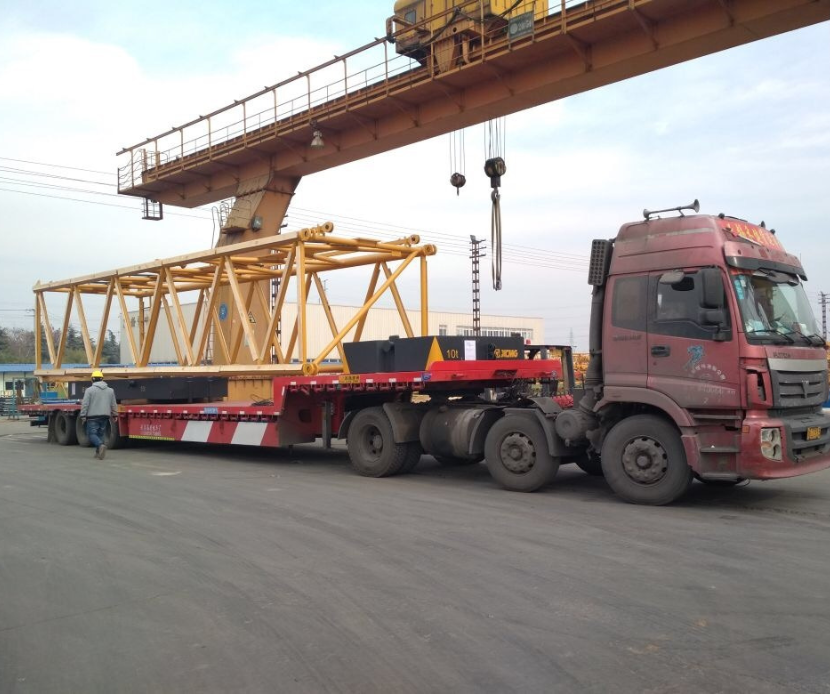
SJ Logistics specializes in the global transportation of high-value, oversized cargo, ensuring safe and efficient delivery for your most complex project logistics needs.
Learn More Project Cargo
Discover tailored warehousing solutions at SJ Logistics, designed for efficiency and strategic storage. Optimize your supply chain with our innovative services today!
Learn More Warehousing
Discover comprehensive NVOCC solutions that streamline your logistics operations, enhance efficiency, and ensure seamless cargo management for your business needs.
Learn More NVOCC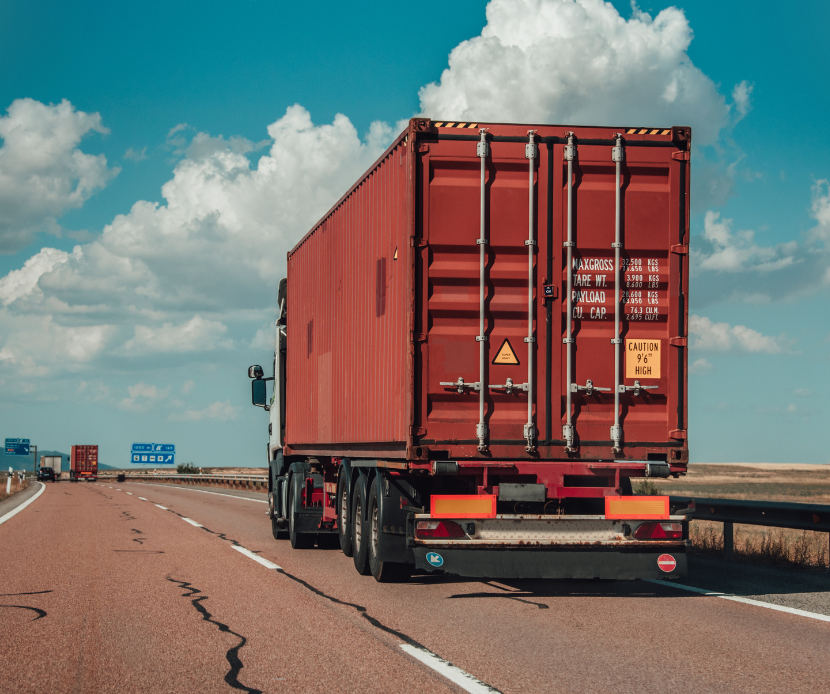

Discover reliable inland transportation solutions that streamline your domestic logistics, ensuring timely and efficient delivery across the country.
Learn More Inland Transportation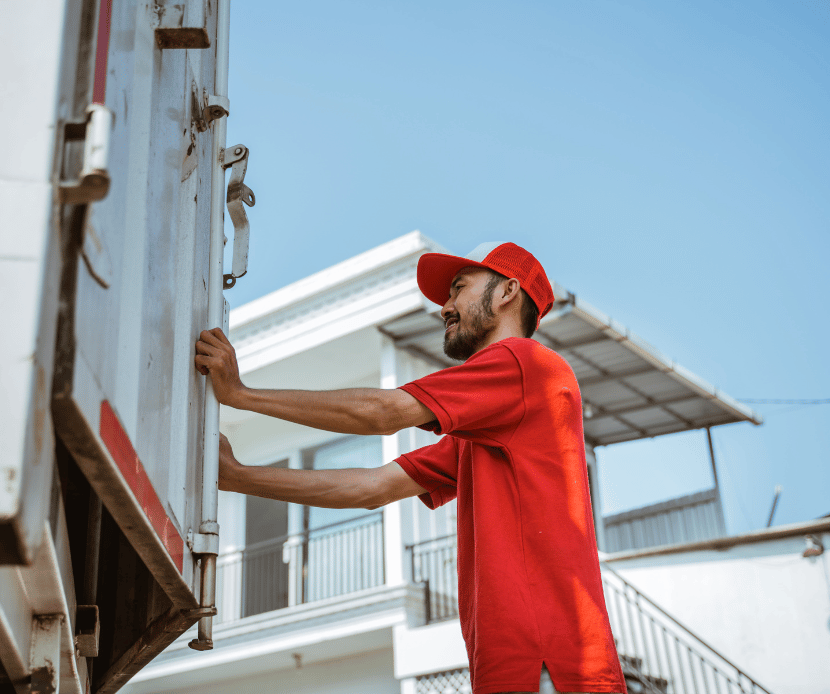

Experience unparalleled convenience with our door delivery solutions, ensuring your packages arrive safely and promptly right at your doorstep. Discover more today!
Learn More Door Delivery

Experience seamless customs clearance with SJ Logistics. Our expert-led solutions ensure precision and efficiency, streamlining your import and export processes.
Learn More CHA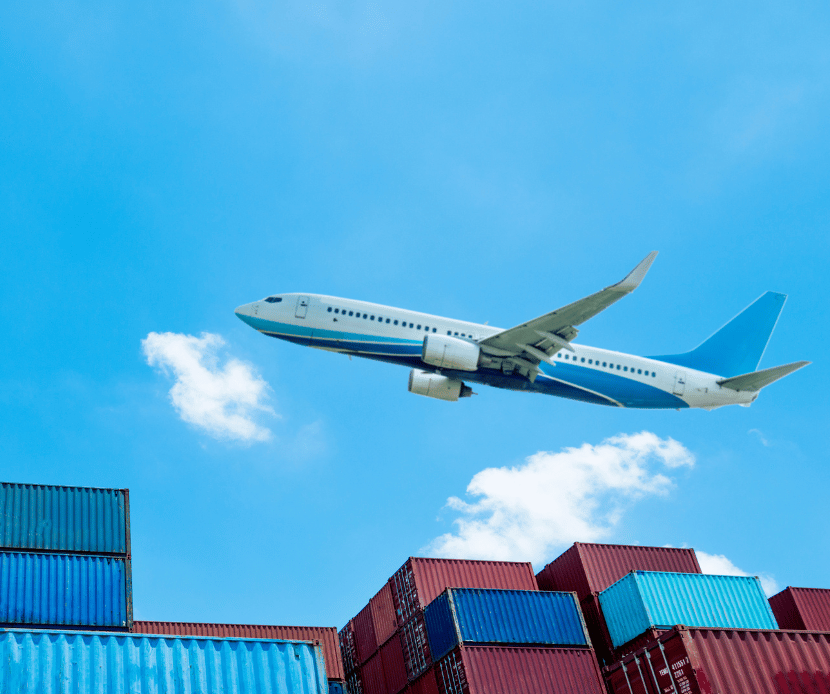

Experience unparalleled speed and reliability with our air freight services, ensuring your cargo reaches its destination swiftly and safely, no matter the distance.
Learn More Air Freight

Unlock the benefits of LCL shipping with our tailored solutions. Enjoy flexibility, cost savings, and strategic support designed for SMEs to thrive in global trade.
Learn More LCL Shipping