

All vessels that traverse the oceans have a route mapped out, but who maps out that route?
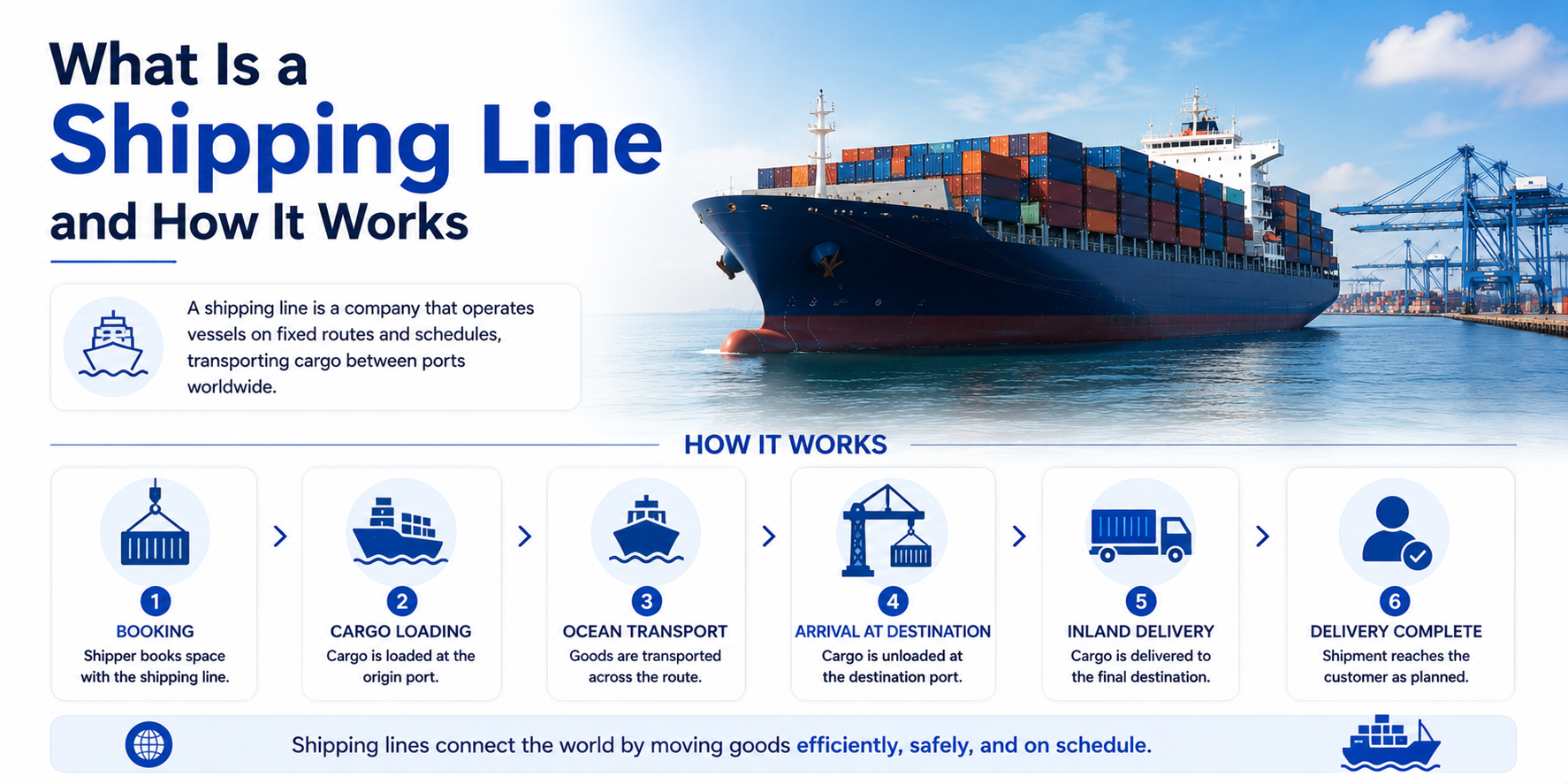
A shipping line is responsible for the planning, operation, and management of the transportation of goods along shipping routes, which link businesses to markets around the world.
A shipping line is a business that owns and/or operates cargo ships and moves goods between ports through the use of sea routes.
It is tasked with carrying the containers safely, efficiently, and on time within the framework of global trade.
The shipping line is the main entity in ocean freight transportation. It handles all the functions necessary for the transportation of goods from one country to another by sea.
Key Responsibilities:
As a broad rule: if goods travel by ship, the shipping company is responsible for making them travel by ship.
A shipping line is a continuous process, not steps. The entire process is structured into a cycle:
Objective: Create a global trade network that is efficient.
Objectives: Matching up the cargo demand with the vessel capacity.
Objective: Ensure safe and timely ocean transport.
Objective: Smooth port-to-port transitions.
Objective: Safe delivery of goods.
Seeing the full system structure makes an understanding of shipping lines easier:
The shipping line is the backbone of ocean transport; the others are its execution, regulation, and coordination.
|
Role |
Shipping Line |
Freight Forwarder |
Liner Agent |
Port Authority |
|
Function |
Moves cargo via sea |
Plans logistics movement |
Executes port operations |
Manages port infrastructure |
|
Ownership |
Owns/operates vessels |
No vessel ownership |
No vessel ownership |
Owns port facilities |
|
Scope |
Global |
Global |
Local |
Local |
|
Focus |
Transport execution |
Coordination & booking |
Port operations |
Regulation & control |
|
Interaction |
Ports, agents, customers |
Shipping lines & customers |
Shipping line & port |
All stakeholders |
International trade depends heavily on shipping lines, as most of the world's trade is carried out by sea freight.
Key Importance:
1. Connect Global Markets
They connect the export and import parties of different continents.
2. Bulk Cargo Movement
There may be thousands of containers in one shipment.
3. Reduce Logistics Cost
Sea freight is the most economical method of moving large quantities.
4. Support Supply Chains
Reliable shipping timetables are essential to industries.
5. Enable Trade Expansion
Entering new international markets is possible for businesses.
If shipping lines were not available, world trade would be smaller, slower, and more costly.
Shipping lines can't have facilities at every port around the world. Every port is unique and has its own systems, rules, and processes.
They work together in a variety of ways:
This partnership guarantees that the bottom line of the world shipping industry works flawlessly.
A shipping line is much more than just a transport company. It is an operator of a logistics network which relies on the coordinated action of several players on the international market.
It requires:
In fact, shipping lines are the lifelines of the global trade system, responsible for transporting goods from one place to another.
Global trade doesn't occur in a vacuum; it goes through a system.
At the heart of this system is the shipping line, linking production centres, markets, ports and shipping partners globally.
Without it:
In simple terms, shipping lines keep the world’s trade network running every single day.

Your Global Trade Navigator, Delivering End-to-End Excellence and Unlocking New Opportunities in Every Link of Your Supply Chain.
Get In Touch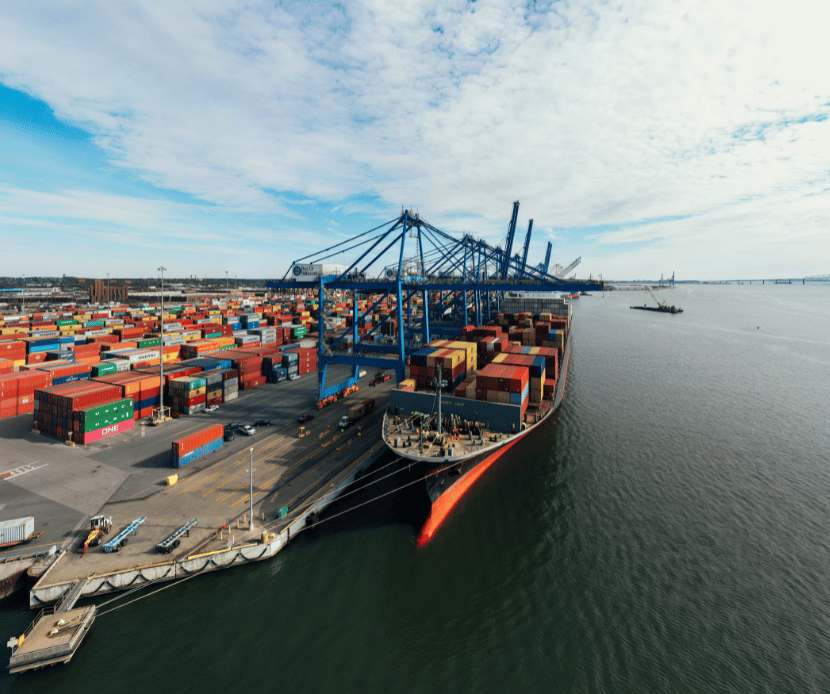

Explore our expert guide on Full Container Load (FCL) Shipping, covering benefits, processes, and tips to optimize your shipping experience efficiently.
Learn More FCL Shipping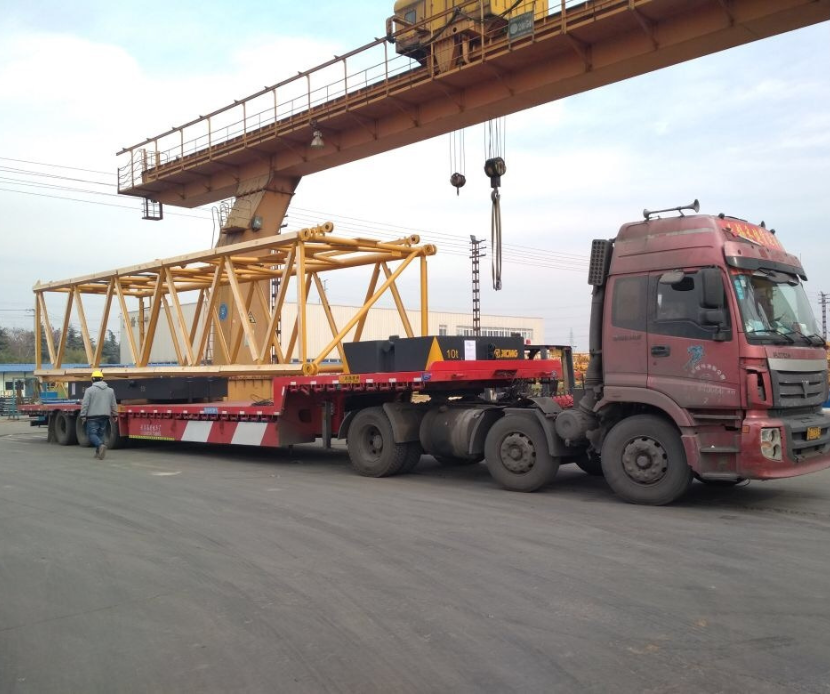
SJ Logistics specializes in the global transportation of high-value, oversized cargo, ensuring safe and efficient delivery for your most complex project logistics needs.
Learn More Project Cargo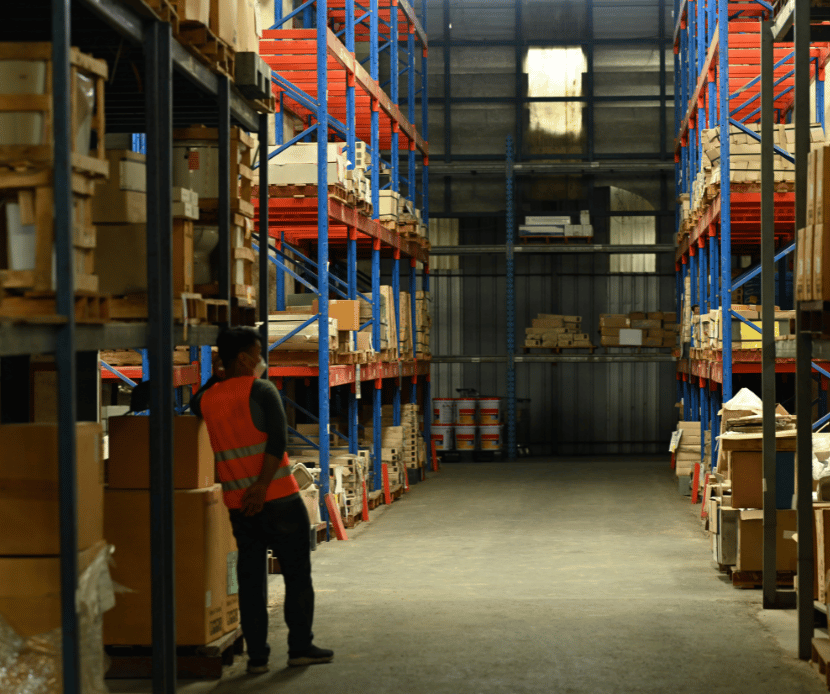

Discover tailored warehousing solutions at SJ Logistics, designed for efficiency and strategic storage. Optimize your supply chain with our innovative services today!
Learn More Warehousing
Discover comprehensive NVOCC solutions that streamline your logistics operations, enhance efficiency, and ensure seamless cargo management for your business needs.
Learn More NVOCC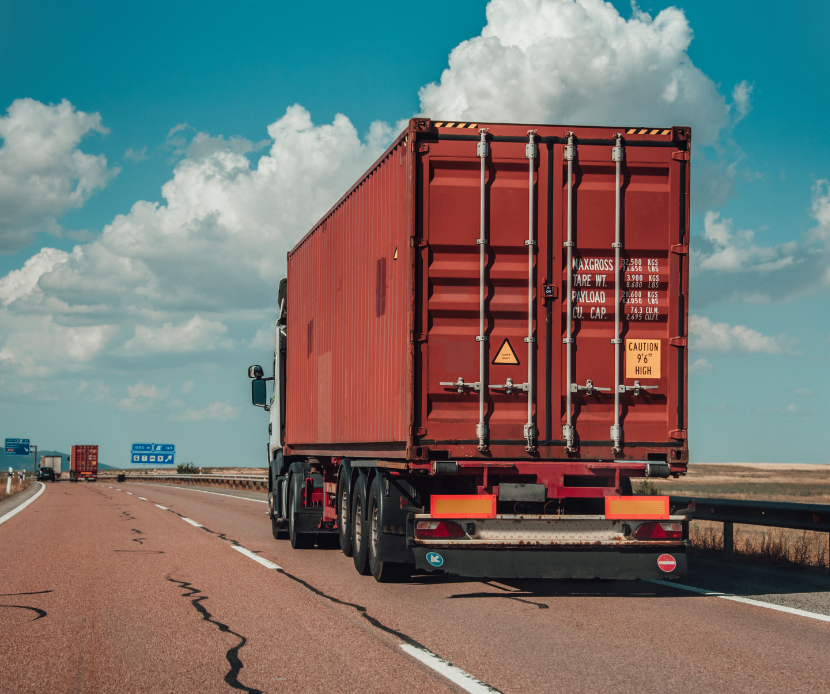

Discover reliable inland transportation solutions that streamline your domestic logistics, ensuring timely and efficient delivery across the country.
Learn More Inland Transportation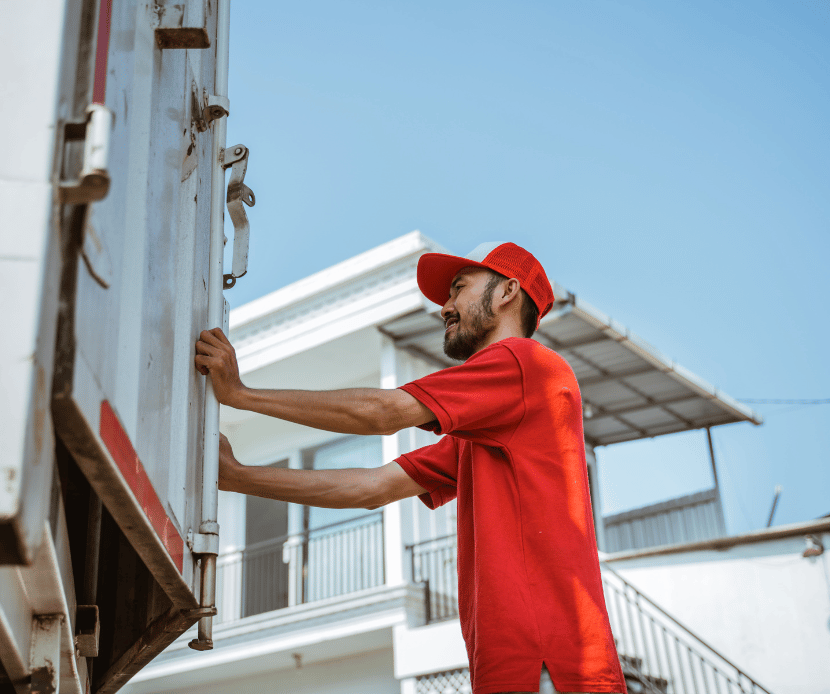

Experience unparalleled convenience with our door delivery solutions, ensuring your packages arrive safely and promptly right at your doorstep. Discover more today!
Learn More Door Delivery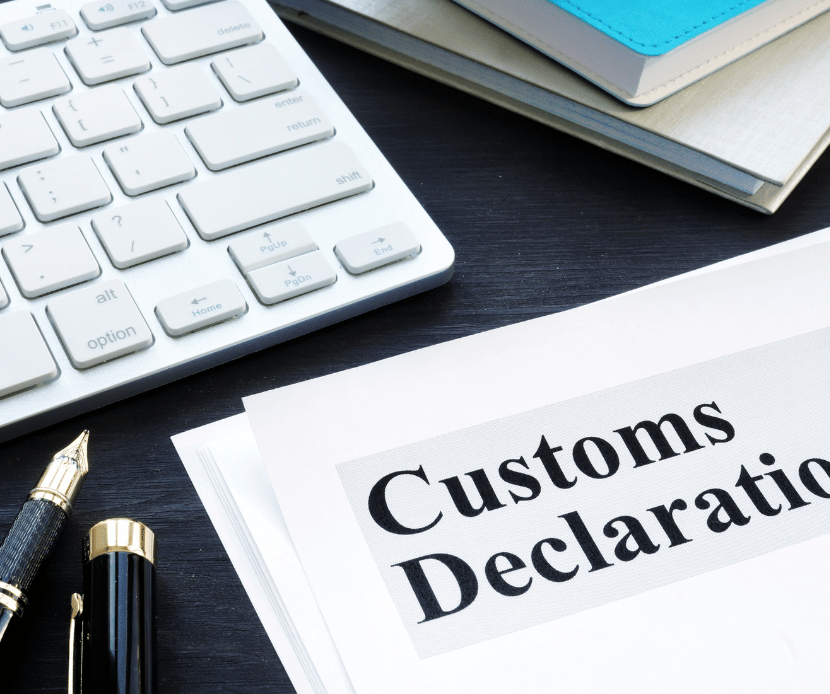

Experience seamless customs clearance with SJ Logistics. Our expert-led solutions ensure precision and efficiency, streamlining your import and export processes.
Learn More CHA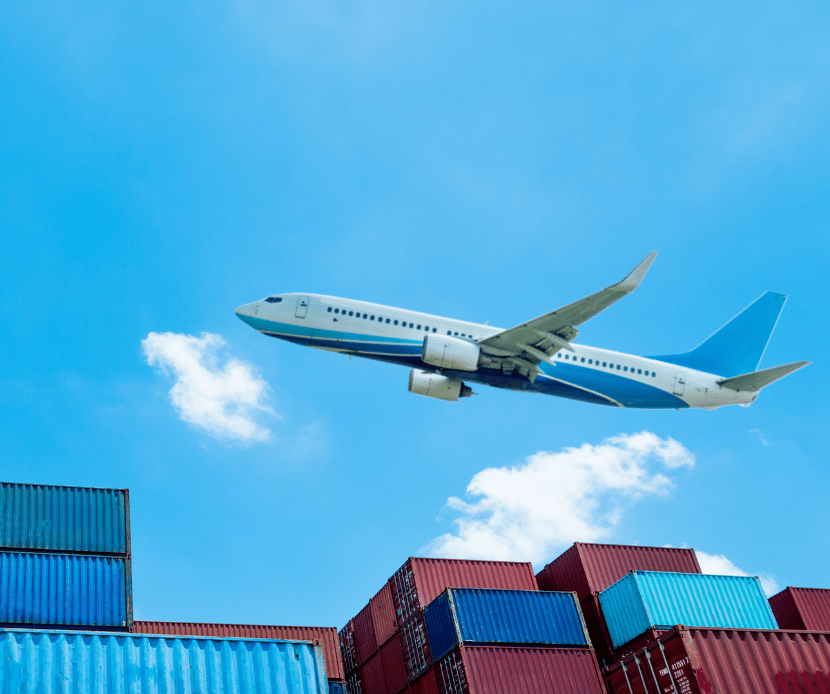

Experience unparalleled speed and reliability with our air freight services, ensuring your cargo reaches its destination swiftly and safely, no matter the distance.
Learn More Air Freight

Unlock the benefits of LCL shipping with our tailored solutions. Enjoy flexibility, cost savings, and strategic support designed for SMEs to thrive in global trade.
Learn More LCL Shipping