

A vessel departs exactly on schedule.
No last-minute confusion.
No endless coordination calls between ports.
No waiting hours for status updates from different teams.
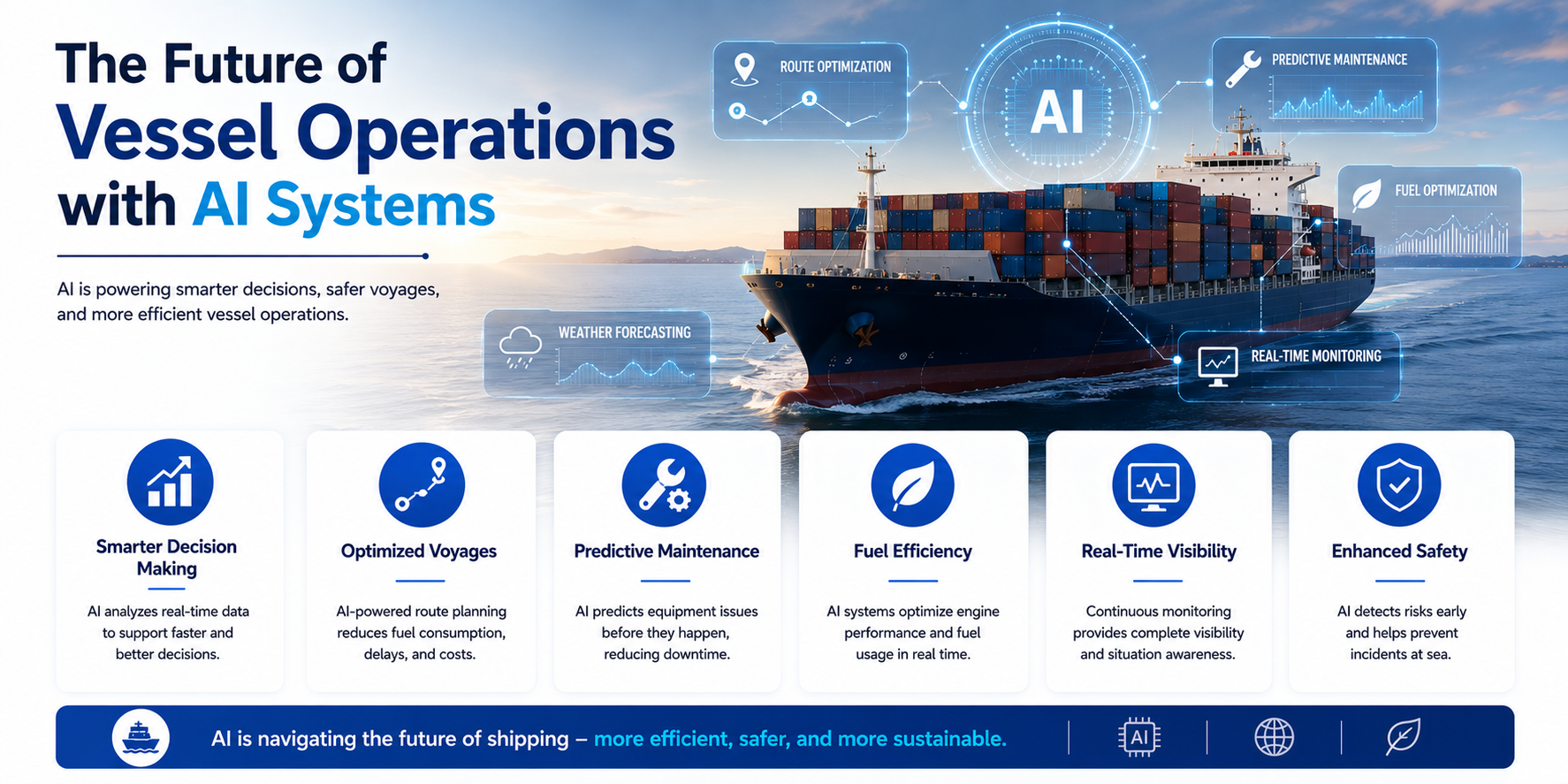
Instead, an operations manager monitors the entire voyage from a centralized dashboard, with real-time updates on vessel speed, fuel efficiency, weather disruptions, cargo status, berth availability, and ETA predictions.
This is no longer a futuristic concept.
AI-powered Vessel Operations are already reshaping how modern shipping companies manage global movement, reduce delays, and improve operational visibility.
And as Indian ports continue expanding under large-scale modernization initiatives, the shift toward intelligent maritime operations is accelerating faster than ever.
Vessel Operations involve the planning, coordination, and execution of maritime shipping activities, including route planning, cargo movement, fuel management, compliance, and port coordination. AI-powered Vessel Operations use predictive analytics, automation, and real-time vessel tracking to improve efficiency, reduce delays, optimize fuel usage, and enhance decision-making across global shipping networks.
Modern Vessel Operations go far beyond just moving ships between ports. They depend on tight coordination across the entire shipping ecosystem.
Key coordination points include:
Core operational areas include:
Even small delays in any of these areas can impact the full supply chain.
Today, Vessel Operations are becoming highly data-driven due to:
In India, this shift is especially visible as major ports like Mundra, Chennai, Visakhapatnam, and Nhava Sheva continue to see growing container traffic under ongoing maritime modernization efforts.
Despite advancements in global shipping, many vessel management workflows still rely heavily on fragmented communication systems.
In many cases, operations teams still depend on:
The result is operational blind spots.
A vessel delay is rarely just a scheduling issue. It can impact cargo availability, trucking schedules, warehousing timelines, customs clearance, and customer commitments across multiple countries.
Traditional maritime operations also struggle with:
This is exactly where AI-driven shipping systems are beginning to transform maritime logistics.
Artificial Intelligence is shifting Vessel Operations from reactive control to predictive decision-making.
Instead of responding to issues after they occur, AI analyzes maritime data to prevent disruptions early.
AI in Vessel Operations can:
It also integrates with:
This shift toward intelligent automation is one of the most significant changes in modern shipping.
AI in maritime logistics is no longer experimental.
It is already being used across commercial shipping operations worldwide.
AI-powered voyage systems can automatically recommend alternative sailing routes when cyclones, storms, or heavy congestion are detected.
This helps reduce fuel waste, avoid delays, and improve vessel safety.
Instead of waiting for engine failures or technical breakdowns, predictive maintenance systems analyze equipment behaviour and alert engineers before serious issues occur.
This reduces downtime and improves fleet reliability.
Fuel is one of the highest operational costs in shipping.
AI systems now help optimize speed, route selection, and engine performance to improve fuel efficiency. Industry estimates suggest smart fuel optimization systems can reduce fuel consumption by 5–15% over time.
Modern maritime dashboards consolidate:
into a single operational interface.
This improves coordination across the entire maritime supply chain.
The Indian maritime sector is entering a major digital transformation phase.
As port modernization, cargo movement, and global trade activity continue expanding, AI-driven Vessel Operations can provide significant advantages for Indian shipping and logistics companies.
AI enables faster coordination across ports, freight teams, and vessel operators through centralized visibility systems.
Predictive planning helps companies minimize avoidable waiting times and operational disruptions.
Exporters, importers, and logistics partners gain better real-time visibility into vessel movement and cargo timelines.
AI-powered voyage optimization improves fleet utilization while reducing operational costs.
As global shipping becomes more technology-driven, companies adopting smart maritime systems early are likely to gain long-term operational advantages.
Companies like SJ Logistics India are increasingly aligning with modern logistics technologies and digital coordination practices to support smarter, more connected shipping operations.
Despite its advantages, AI adoption in maritime logistics still faces practical challenges.
Many shipping operators continue dealing with:
In several regions, port infrastructure modernization is still developing, which can slow down large-scale integration of AI-based systems.
There is also an important operational reality:
AI can process data quickly, but shipping decisions still require human judgement, especially during unpredictable maritime situations.
The most effective Vessel Operations models are those where technology supports experienced operators, not replaces them.
AI cannot replace real-world maritime experience.
Shipping still involves unpredictability, like:
Experienced professionals are needed to turn AI insights into action by managing:
AI improves visibility, but human expertise ensures execution. That balance will define the future of vessel operations.
AI helps improve Vessel Operations through predictive analytics, smart routing, fuel optimization, automated documentation, and real-time operational visibility. It enables shipping companies to make faster and more accurate operational decisions.
No. AI is designed to support Vessel Operators, not replace them. Human expertise remains essential for managing complex maritime situations, operational risks, and real-world decision-making.
AI improves Vessel Management by reducing manual coordination, predicting operational risks, improving fleet visibility, optimizing fuel consumption, and minimizing delays across maritime supply chains.
AI adoption in India’s maritime industry is growing steadily, especially among larger ports, logistics providers, and shipping companies investing in digital transformation and smart operational systems.
Smart maritime operations refer to technology-driven shipping systems that use AI, automation, predictive analytics, IoT sensors, and real-time data to improve vessel performance, safety, and operational efficiency.
The future of Vessel Operations is shifting from traditional shipping to intelligent, data-driven decision-making powered by visibility and speed.
Delays are now more often caused by poor communication and limited visibility than distance or weather. AI helps reduce these gaps through better coordination and predictive insights.
Early adopters will:
As maritime systems evolve, smarter Vessel Management will define competitive advantage. SJ Logistics continues to align with these modern logistics advancements.

Your Global Trade Navigator, Delivering End-to-End Excellence and Unlocking New Opportunities in Every Link of Your Supply Chain.
Get In Touch

Explore our expert guide on Full Container Load (FCL) Shipping, covering benefits, processes, and tips to optimize your shipping experience efficiently.
Learn More FCL Shipping
SJ Logistics specializes in the global transportation of high-value, oversized cargo, ensuring safe and efficient delivery for your most complex project logistics needs.
Learn More Project Cargo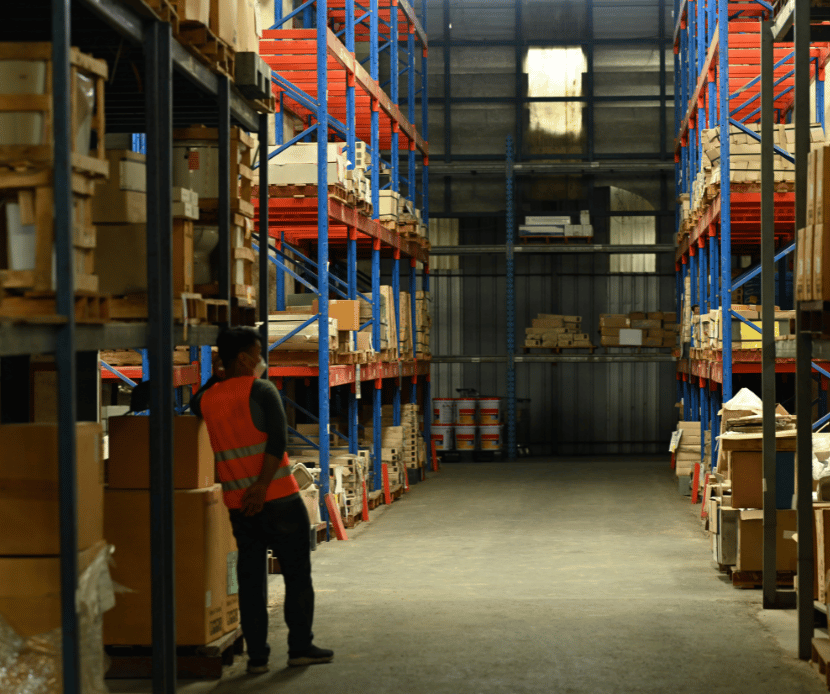

Discover tailored warehousing solutions at SJ Logistics, designed for efficiency and strategic storage. Optimize your supply chain with our innovative services today!
Learn More Warehousing
Discover comprehensive NVOCC solutions that streamline your logistics operations, enhance efficiency, and ensure seamless cargo management for your business needs.
Learn More NVOCC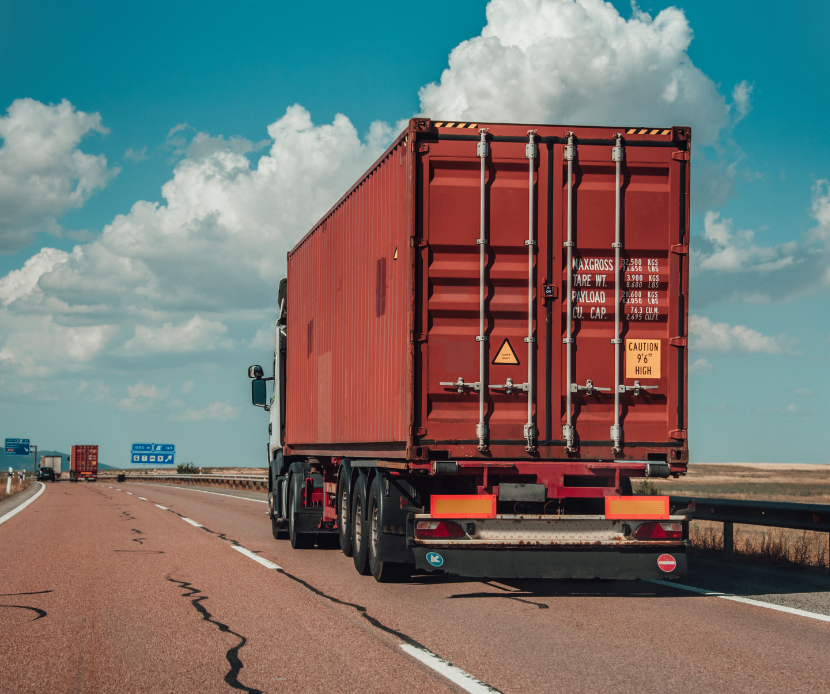

Discover reliable inland transportation solutions that streamline your domestic logistics, ensuring timely and efficient delivery across the country.
Learn More Inland Transportation

Experience unparalleled convenience with our door delivery solutions, ensuring your packages arrive safely and promptly right at your doorstep. Discover more today!
Learn More Door Delivery

Experience seamless customs clearance with SJ Logistics. Our expert-led solutions ensure precision and efficiency, streamlining your import and export processes.
Learn More CHA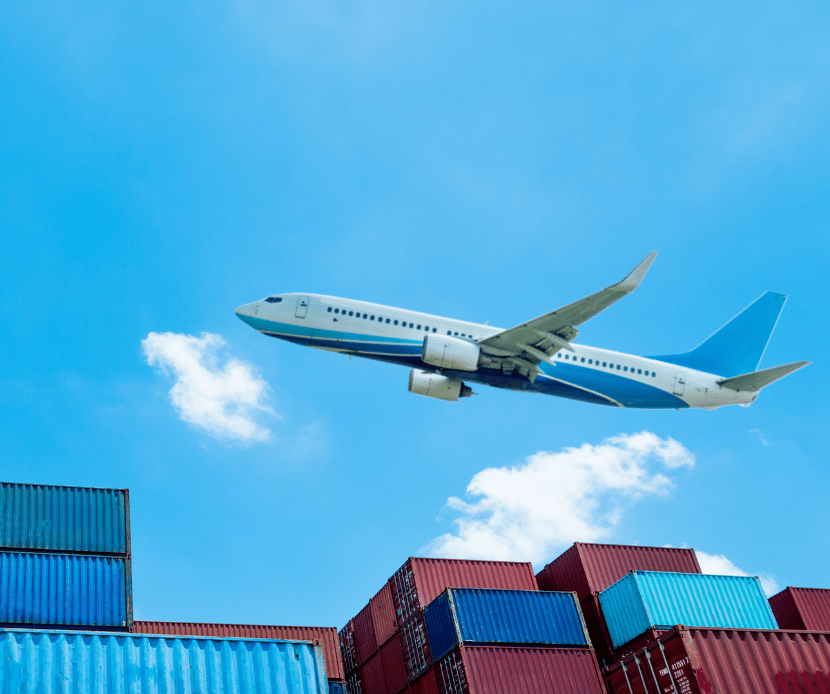

Experience unparalleled speed and reliability with our air freight services, ensuring your cargo reaches its destination swiftly and safely, no matter the distance.
Learn More Air Freight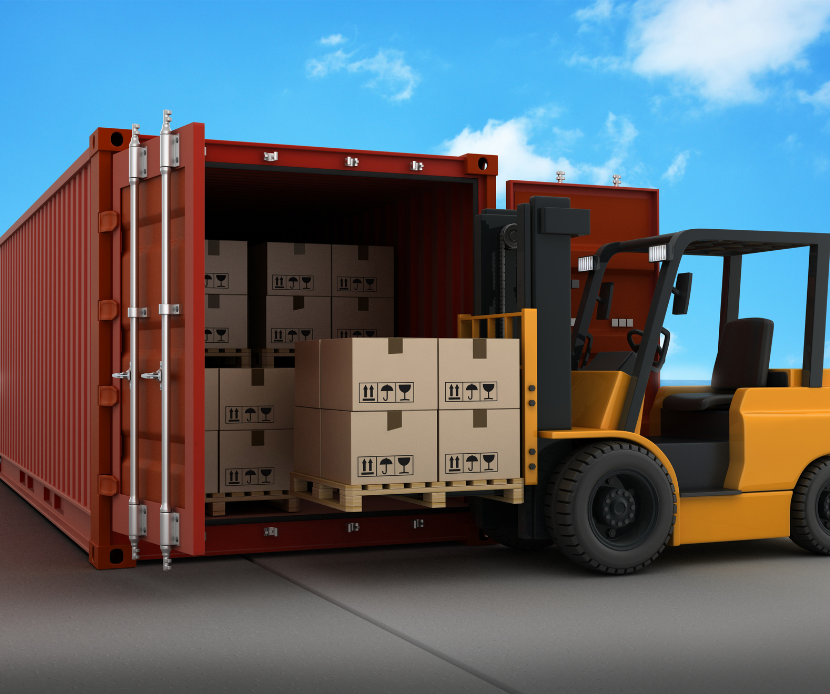

Unlock the benefits of LCL shipping with our tailored solutions. Enjoy flexibility, cost savings, and strategic support designed for SMEs to thrive in global trade.
Learn More LCL Shipping