

When something goes wrong at a port, the first question is always the same:
Who is actually responsible?
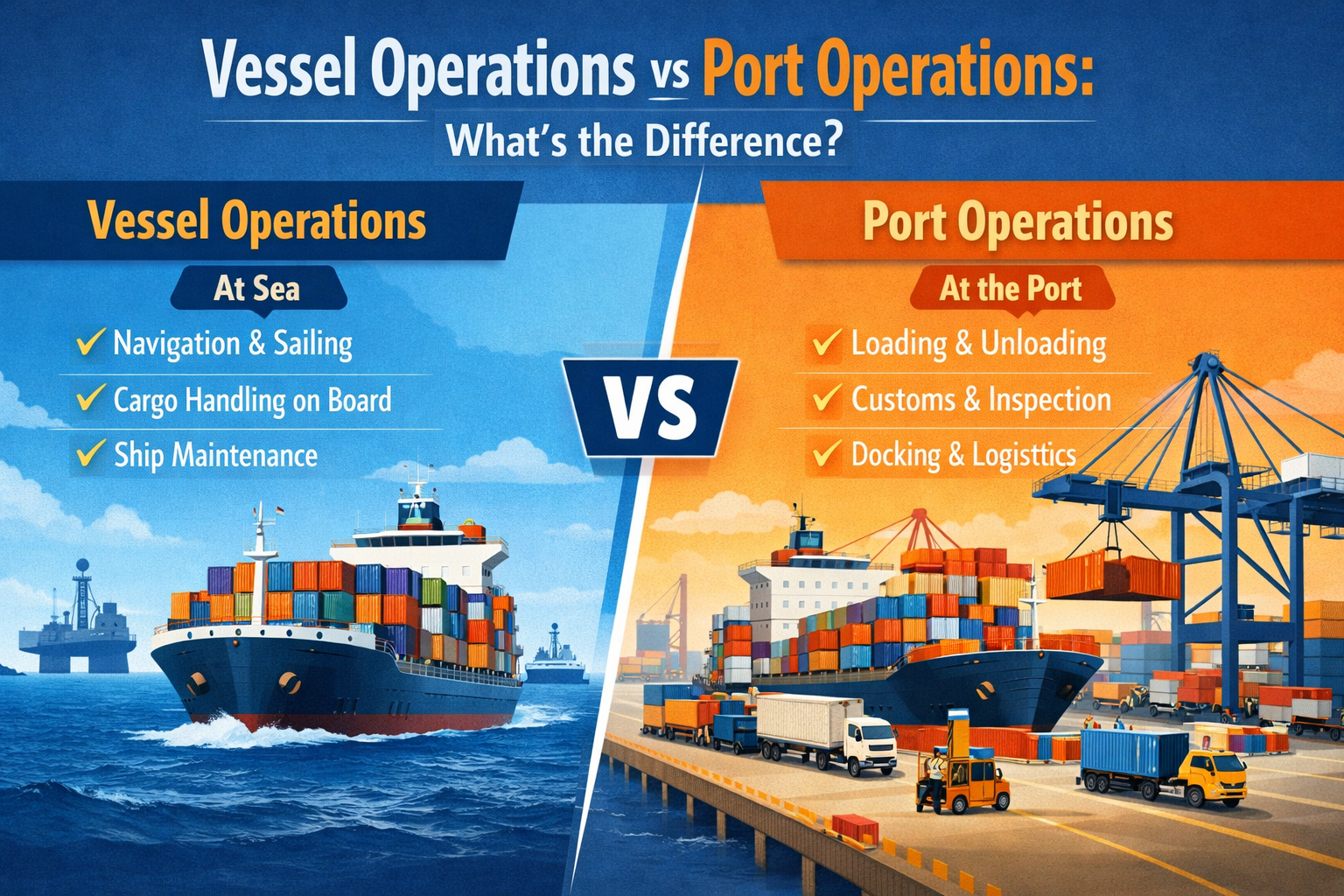
The answer depends on whether the issue falls under vessel operations or port operations. These two roles work closely together—but they are not the same.
Knowing the difference helps shippers avoid delays, blame loops, and unnecessary costs.
What Are Vessel Operations?
Vessel operations cover all activities related to how a ship is planned, managed, and sailed while calling at a port.
This includes ensuring the vessel arrives on time, follows port rules, coordinates required services, completes cargo operations as scheduled, and departs without delay.
Vessel operations are handled by the vessel operator, whose responsibility is to keep the ship compliant, on schedule, and ready to sail.
When vessel operations fail, delays usually start before cargo even reaches the terminal.
What Vessel Operations Include
Vessel operations focus entirely on the ship, not the terminal.
They typically include:
These activities remain under the control of the vessel operator. If filings are late or arrival windows are missed, delays originate here.
What Are Port Operations?
Port operations cover all activities related to how cargo is handled inside the port or terminal.
These begin once the vessel is alongside the berth and continue until the cargo exits the terminal.
Port operations are managed by port authorities or terminal operators, not the vessel operator.
Even when a vessel arrives on time, weak port operations can still slow cargo movement.
What Port Operations Include
Port operations focus on the terminal infrastructure and cargo flow, not the ship.
They typically include:
At congested ports such as Nhava Sheva or Mundra, delays often start at this stage due to yard backlogs or equipment constraints—even when vessel operations are on schedule.
The Key Differences between Vessel Operations and Port Operations
Both functions impact shipment timelines, but they control different parts of the process.
|
Area |
Vessel Operations |
Port Operations |
|
Main focus |
Ship planning and movement |
Cargo handling and terminal flow |
|
Controlled by |
Vessel operator |
Port or terminal operator |
|
Starts |
Before vessel arrival |
When vessel berths |
|
Ends |
At sailing clearance |
When cargo exits the terminal |
|
Common risks |
Late arrival, missed filings |
Congestion, slow handling |
Understanding this split helps shippers identify where delays originate and who is responsible for resolving them.
Who Is Responsible When Delays Happen?
Not all delays come from the same source. Knowing where the delay starts allows faster action and prevents finger-pointing.
|
Delay Type |
Responsibility |
|
Vessel arrives late |
Vessel operations |
|
Missed arrival or berth window |
Vessel operations |
|
Wrong or late pre-arrival filings |
Vessel operations |
|
Crew, fuel, or ship service delays |
Vessel operations |
|
Sailing clearance not received |
Vessel operations |
|
Berth congestion |
Port operations |
|
Slow crane or equipment handling |
Port operations |
|
Yard or storage backlog |
Port operations |
|
Gate or truck movement delays |
Port operations |
Clear responsibility reduces downtime and prevents unnecessary cost escalation.
Why This Difference Impacts Cost
When responsibility is unclear, costs rise quickly.
Delays caused by vessel operations often lead to:
Delays caused by port operations often result in:
Understanding who controls which stage helps shippers act early and avoid avoidable expenses.
How SJ Logistics Supports Direct Vessel Operations
SJ Logistics India Ltd operates as the agent of S J Logisol Shipping LLC, Dubai, supporting its direct vessel operations.
Through this structure, SJ Logistics supports tighter control over planning and execution compared to standard forwarding models.
SJ Logistics supports direct vessel operations by:
This setup allows better predictability for shippers using these services.
Why Direct Vessel Operations Matter for Shippers
When vessel schedules are controlled, outcomes improve.
Direct vessel operations help shippers by:
For trade lanes where timing matters, this stability is a major advantage.
FAQs: Vessel Operations vs Port Operations
1. Are vessel operations and port operations the same?
No. Vessel operations manage the ship’s planning, arrival, and sailing. Port operations manage cargo handling inside the terminal.
2. Who controls vessel operations?
Vessel operations are controlled by the vessel operator. In this case, SJ Logistics India Ltd acts as the agent of S J Logisol Shipping LLC, Dubai, supporting direct vessel operations.
3. Who controls port operations?
Port authorities or terminal operators control port operations. Vessel operators do not manage cranes, yards, or gate movement.
4. If cargo is delayed at port, who is responsible?
Responsibility depends on where the delay starts. Ship-related delays fall under vessel operations, while terminal-related delays fall under port operations.
5. Does a logistics company handle both vessel and port operations?
Most logistics companies coordinate shipments. Vessel operations are handled by vessel operators, while port operations remain with the terminal.
Know Where Responsibility Starts and Ends
Vessel operations and port operations are connected—but they do not overlap.
When roles remain clear:
SJ Logistics India Ltd, acting as the agent of S J Logisol Shipping LLC, Dubai, supports direct vessel operations with defined routes and sailing schedules. This gives shippers clearer expectations on transit time, while port operations remain managed by the terminal.
Knowing this difference helps you ask the right questions, contact the right party, and avoid wasted time when issues arise.
For clear vessel schedules and predictable sailings, connect with SJ Logistics India Ltd.

Your Global Trade Navigator, Delivering End-to-End Excellence and Unlocking New Opportunities in Every Link of Your Supply Chain.
Get In Touch

Explore our expert guide on Full Container Load (FCL) Shipping, covering benefits, processes, and tips to optimize your shipping experience efficiently.
Learn More FCL Shipping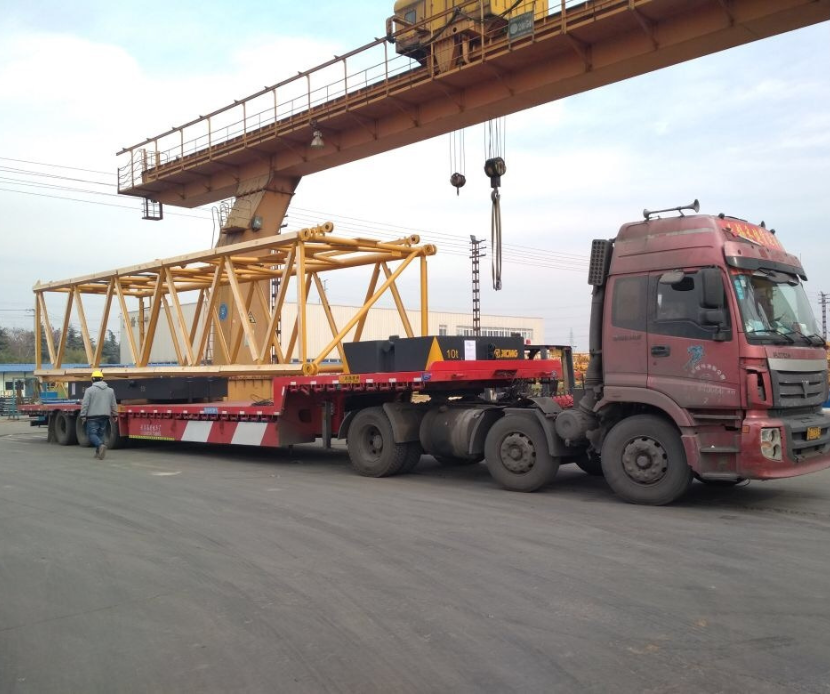
SJ Logistics specializes in the global transportation of high-value, oversized cargo, ensuring safe and efficient delivery for your most complex project logistics needs.
Learn More Project Cargo

Discover tailored warehousing solutions at SJ Logistics, designed for efficiency and strategic storage. Optimize your supply chain with our innovative services today!
Learn More Warehousing
Discover comprehensive NVOCC solutions that streamline your logistics operations, enhance efficiency, and ensure seamless cargo management for your business needs.
Learn More NVOCC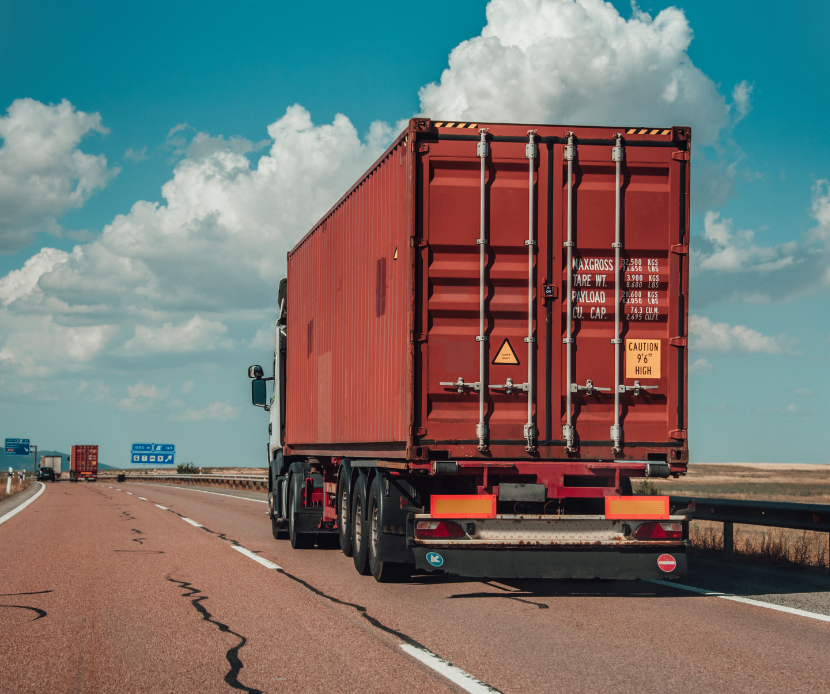

Discover reliable inland transportation solutions that streamline your domestic logistics, ensuring timely and efficient delivery across the country.
Learn More Inland Transportation

Experience unparalleled convenience with our door delivery solutions, ensuring your packages arrive safely and promptly right at your doorstep. Discover more today!
Learn More Door Delivery

Experience seamless customs clearance with SJ Logistics. Our expert-led solutions ensure precision and efficiency, streamlining your import and export processes.
Learn More CHA

Experience unparalleled speed and reliability with our air freight services, ensuring your cargo reaches its destination swiftly and safely, no matter the distance.
Learn More Air Freight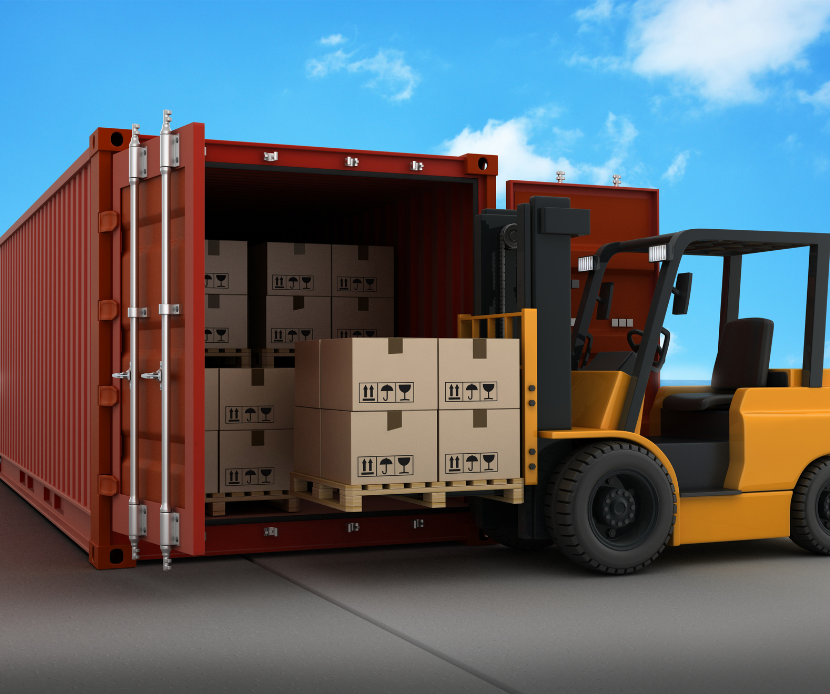

Unlock the benefits of LCL shipping with our tailored solutions. Enjoy flexibility, cost savings, and strategic support designed for SMEs to thrive in global trade.
Learn More LCL Shipping